ASL® (Application Services Library) - hardcopy
ASL® (Application Services Library) is the best-practice framework for application management. It gives organizations a structured way to manage and optimise the entire application portfolio and life cycle — maximising business outcomes and user experience while containing cost, reducing risk and ensuring compliance.



What is ASL?
ASL, the Application Services Library, is a public-domain framework for managing applications throughout their life cycle — from ideation to retirement. The current version, ASL 3, is built for today's hybrid application landscape of SaaS, packaged software and custom-built applications, and supports hybrid delivery models spanning waterfall/project delivery, Agile development and DevOps. It integrates well-known best practices such as BiSL, Agile, DevOps and IT service management into one comprehensive approach.
The ASL 3 framework
ASL provides a best-practice process framework that covers every activity needed to manage the life cycle of applications and their related vendors.
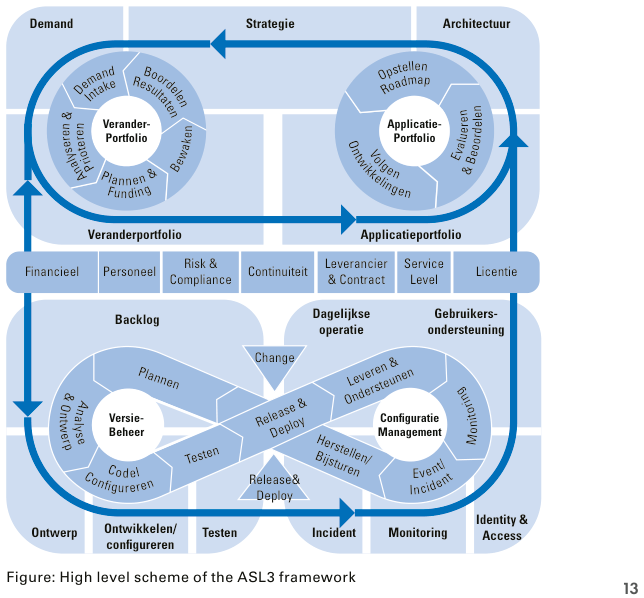
The framework is organised into five process clusters: Strategic Portfolio Management (aligning applications and initiatives with strategic goals and architectural roadmaps), Develop and Maintain (designing and configuring changes, upgrades and fixes), Connecting Processes (controlled change and release into production), Operations and Support (day-to-day operations and service requests) and Supporting Processes (managing funding, people, licenses, costs, risks and vendors).
Why organizations use ASL
The application landscape in most organizations has grown enormously in complexity — hundreds of applications delivered by a multi-vendor ecosystem across private and public cloud. ASL helps you rationalise and modernise that portfolio, reduce technology debt, deliver new features faster and more safely, and ensure compliance with a growing number of regulatory requirements. It integrates with practices such as BiSL, TOGAF, ITIL, DevOps, FinOps and cyber security to build a complete management system.
Who is ASL for?
ASL is designed for everyone involved in managing the application portfolio: application portfolio managers, IT managers, application managers and product owners, software developers and application specialists, application support specialists, business analysts and architects, as well as those responsible for the cost, risk and compliance of applications.
ASL certification and courseware
Van Haren is the publisher of accredited ASL® learning materials, including ASL 3 Foundation courseware and the ASL Foundation exam, plus the reference book Een framework voor applicatiemanagement. Browse all ASL titles →